


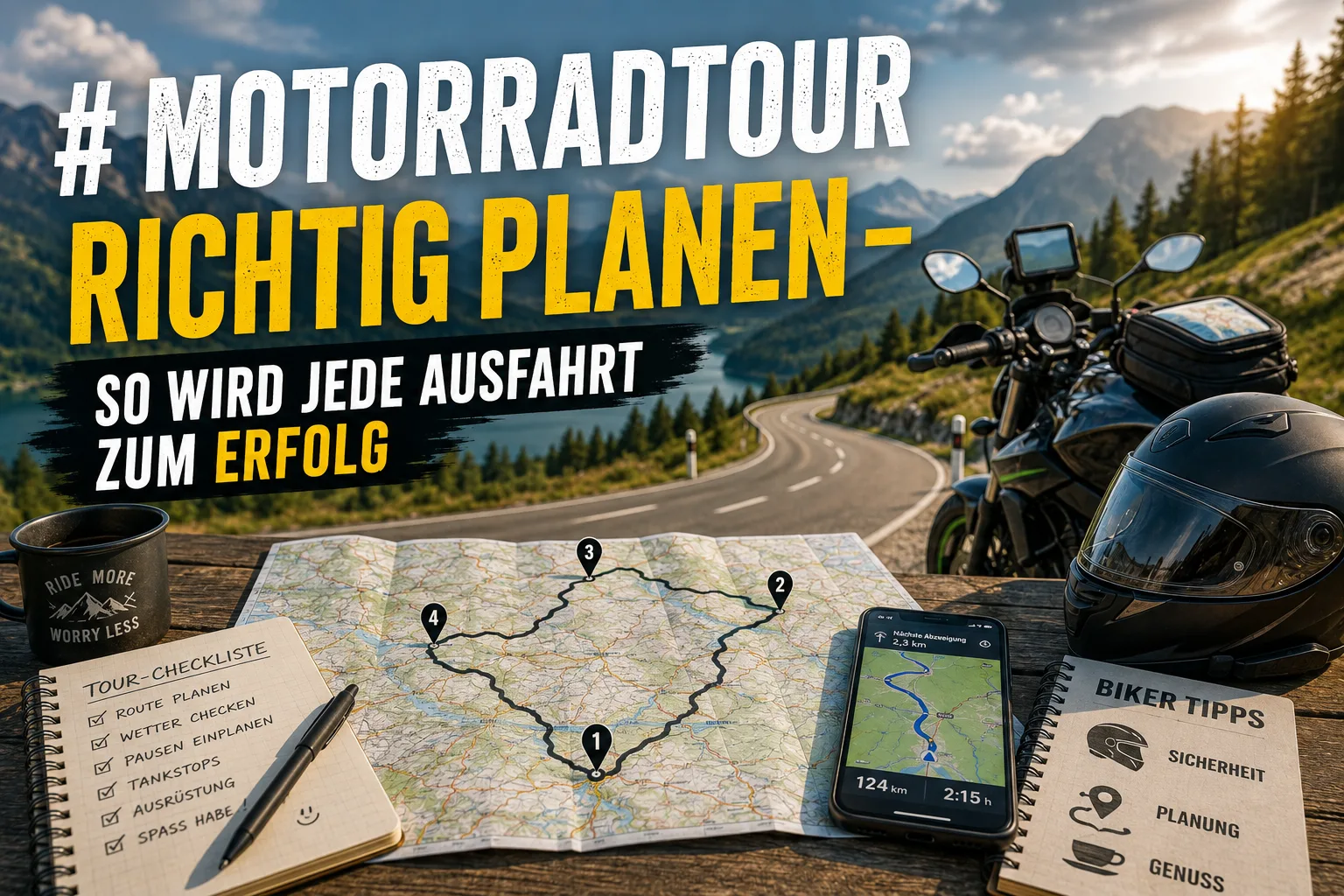
 KI-generiertes Symbolbild
Planning a motorbike tour properly – How to make every ride a success
From the initial idea to your return: combining route, breaks, weather, luggage and a Plan B in a sensible way.
Planning a motorbike ride properly means striking the right balance between the joy of riding and realistic preparation. If you take into account the route, breaks, the weather, your motorbike and your personal stamina before setting off, you’ll usually have a more relaxed ride and be able to react more flexibly whilst on the road. This article is aimed at beginners as well as experienced riders who want to prepare their trips in a more structured way.
Planning a motorbike tour properly: The basics before choosing a route
The starting point isn’t necessarily the most scenic road, but rather the question: what is the aim of this ride? A short evening spin, a full day on winding roads, a multi-day trip or a group ride all have different requirements. If you clarify the destination, available time and group early on, you’ll avoid many typical conflicts when planning the route later on.
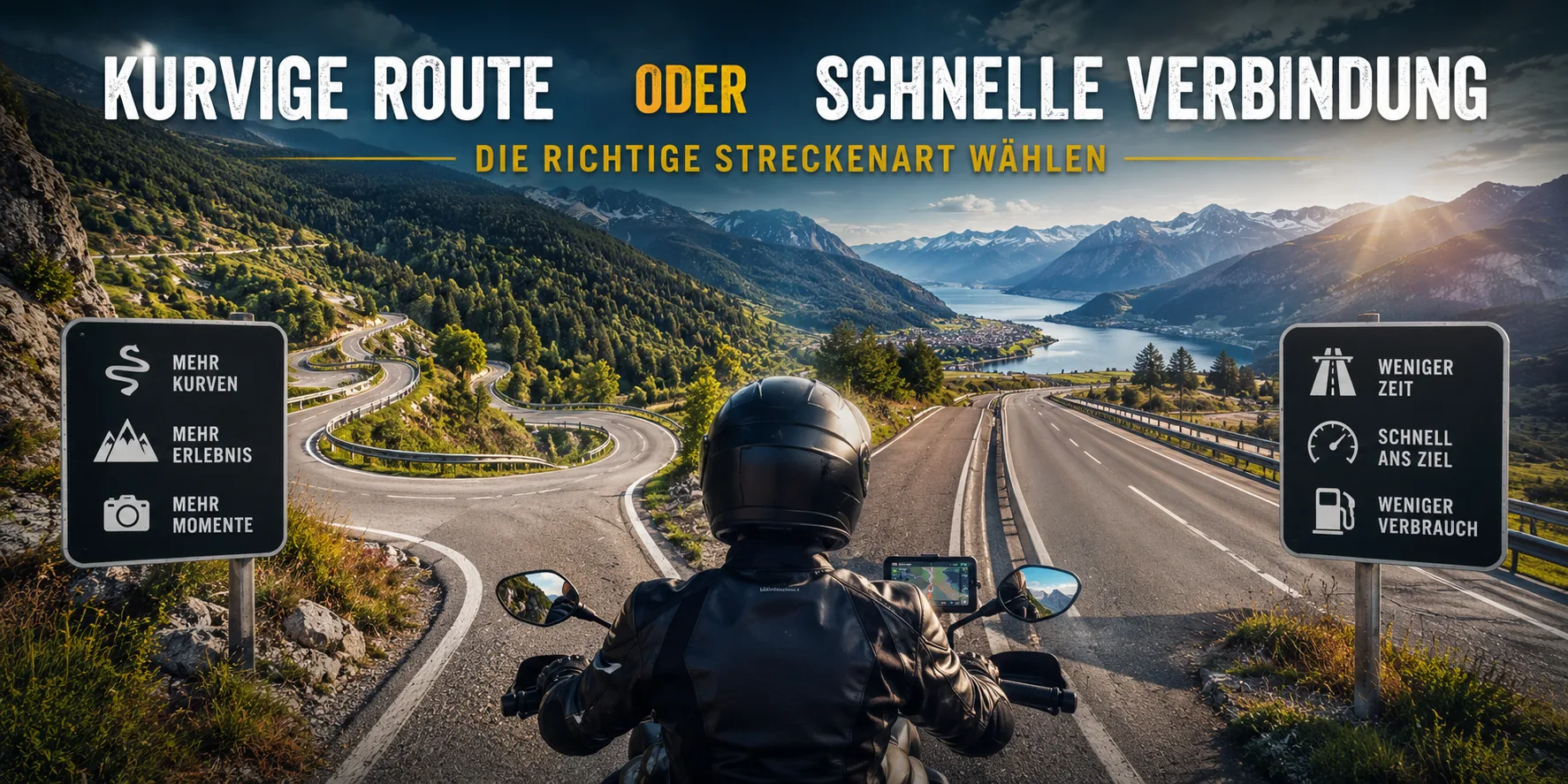
It’s helpful to set a rough priority: should the ride be primarily challenging to ride, scenic, relaxed or goal-oriented? A mix usually makes sense. However, every additional requirement takes time. Plenty of tight bends, passing through towns, photo stops, elevation gain and unfamiliar roads make a stage noticeably slower than a route via major roads.
- Set realistic start and latest return times
- Whether you’re riding alone, as a pair or in a group – adjust your pace accordingly
- Take into account your riding experience, the type of motorbike and how you’re feeling on the day
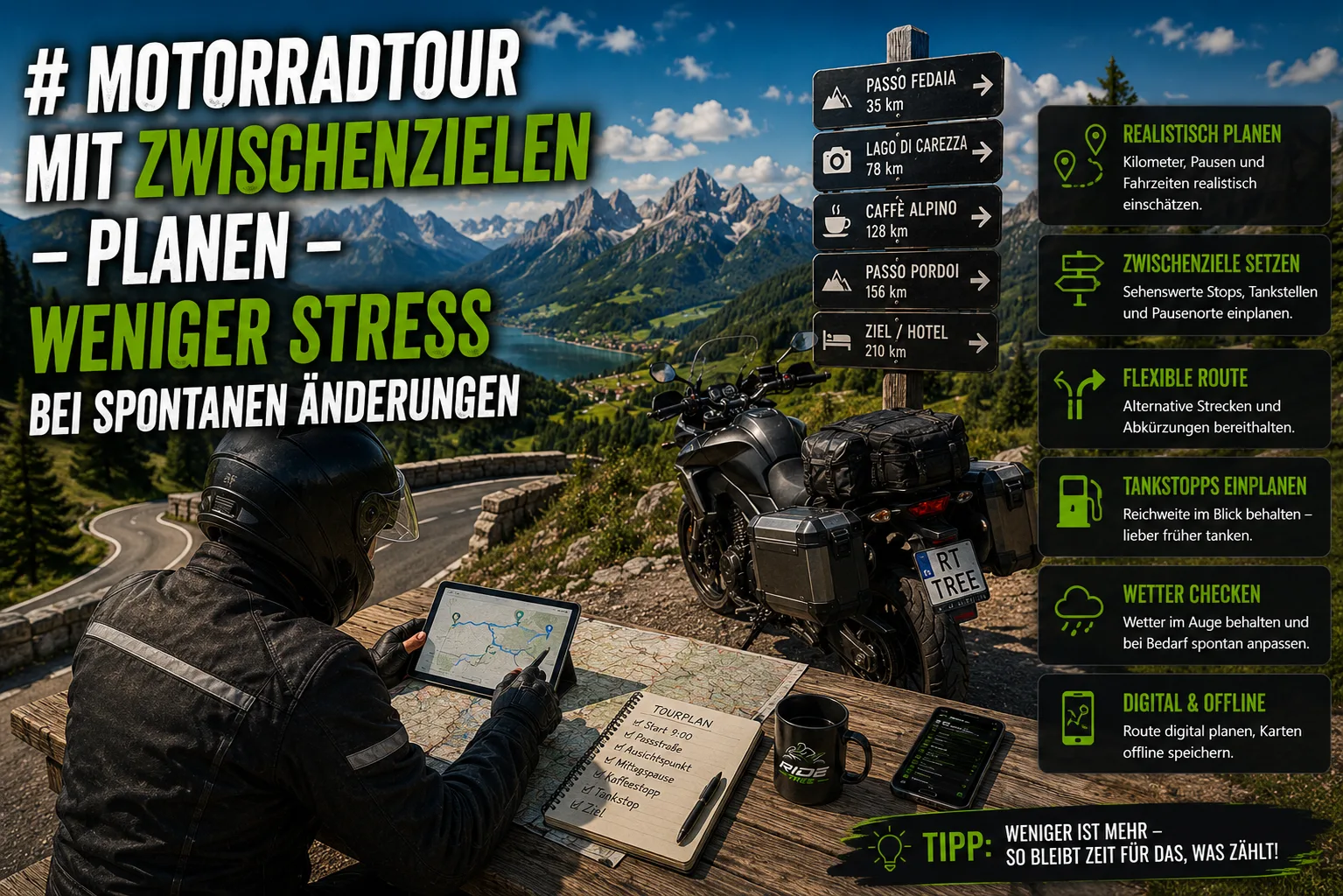
- Define destinations, viewpoints or overnight stops solely as waypoints
- Bear in mind a simpler shortcut or alternative route for the return journey
Plan the core of the ride firmly, and keep the rest flexible. A clear starting point, two or three key waypoints and a return route are more than enough for many day trips.
The right route: journey time is more important than kilometres
Distance alone says little about how demanding a stage of a motorbike ride will be. A winding country road route with town centres, inclines and lots of stops can feel significantly longer than a greater distance on roads where the traffic flows freely. Navigation details are therefore a guide, not a reliable indication of the entire day’s ride.
Divide the route into manageable sections. For each section, it’s worth checking the nature of the road, refuelling options, possible places to stop and alternative routes. Particularly on unfamiliar routes, a map or route view can help you spot unintentionally long stretches of motorway, very narrow side roads or complicated urban sections at an early stage.
In the RideTree ‘Knowledge’ collection, you’ll find further basic information on navigation, riding technique and equipment, which can be easily incorporated into your individual tour planning.
An ambitious stage
- Lots of bends, mountain passes or sights in a single day
- Allow less extra time for traffic jams, diversions and longer breaks
- Requires good concentration and a resilient group
- Can be very appealing in ideal conditions
A relaxed stage
- Fewer main destinations and deliberately leaving some free time
- More time for photo stops, meals and spontaneous detours
- Easier to adapt to the weather and how you’re feeling on the day
- Often more enjoyable for riders of mixed experience levels
 KI-generiertes Symbolbild
Organise stages, breaks and refuelling stops sensibly
Breaks aren’t a sign of a lack of stamina, but part of good tour planning. Concentration wanes when heat, cold, wind, noise or challenging sections of the route all come together. Regular short breaks can help to refocus your attention and spot any tension building up in good time.
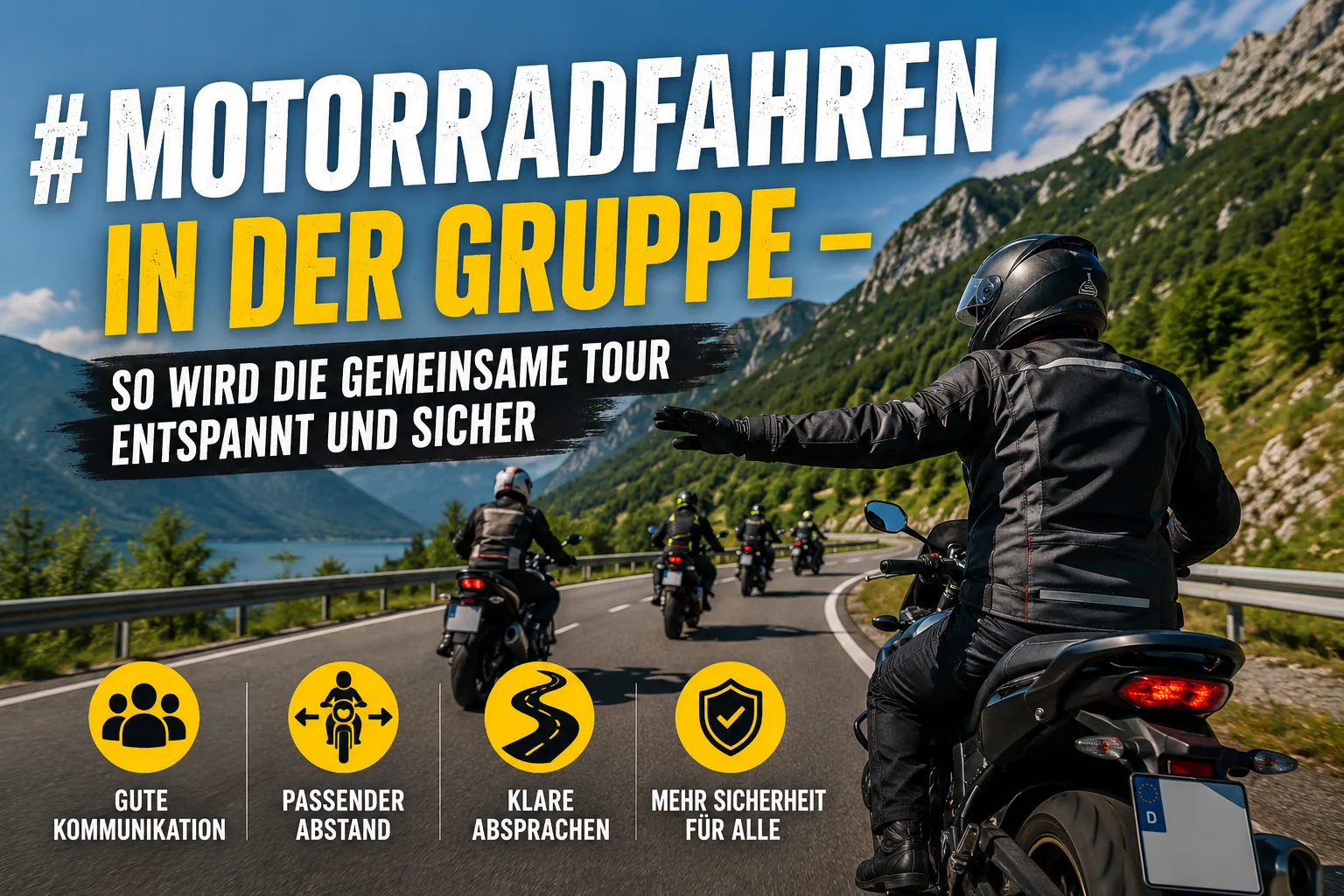
Plan your breaks not just by the clock, but also according to the route profile. After a long, winding stretch, a short stop is often more sensible than waiting until many kilometres later. On group rides, it’s worth agreeing on meeting points and approximate stops in advance. That way, no one has to improvise to catch up or make risky manoeuvres whilst riding.
When it comes to refuelling, it’s better to err on the side of caution than to be over-optimistic. Find out about suitable refuelling options, particularly in sparsely populated areas, on remote mountain passes or when travelling outside normal opening hours. Your actual range depends, amongst other things, on your motorbike, load, riding style, speed, wind and elevation profile.
| Planning step | Practical question | A sensible margin |
|---|---|---|
| Riding section | Just how challenging is the road really? | Allow time for slower sections and diversions |
| Break | When is the group likely to need a break? | An extra short stop without any time pressure |
| Refuelling | Where can you find a reliable place to stop along the route? | Don’t wait until your fuel level is very low before looking |
| Daily destination | Will the journey still be enjoyable if you set off later? | Have a simpler route or a flexible destination to fall back on |
Take the weather, the season and a Plan B into account
Weather forecasts should be checked again shortly before setting off. It’s not just the temperature at the starting point that matters: conditions can vary significantly in high-altitude areas, valleys, coastal regions and areas prone to thunderstorms. Wet conditions, fallen leaves, grit, shaded areas or restricted visibility can alter the character of a route considerably.
Having a Plan B does not make the ride any less adventurous; rather, it ensures you can adapt. This could be a shorter loop, a route through lower-lying areas, an earlier destination for the day, or the decision to postpone the ride. In the event of warnings, very poor visibility or conditions that are beyond your own ability, exercising caution is often the more sensible option.
- Check the weather along the entire route, not just where you live
Hat dir dieser Beitrag geholfen? 0
Melde dich an, um diesen Beitrag zu bewerten.
Kommentare 0
Melde dich an, um zu kommentieren.
Noch keine Kommentare - sei der Erste.